
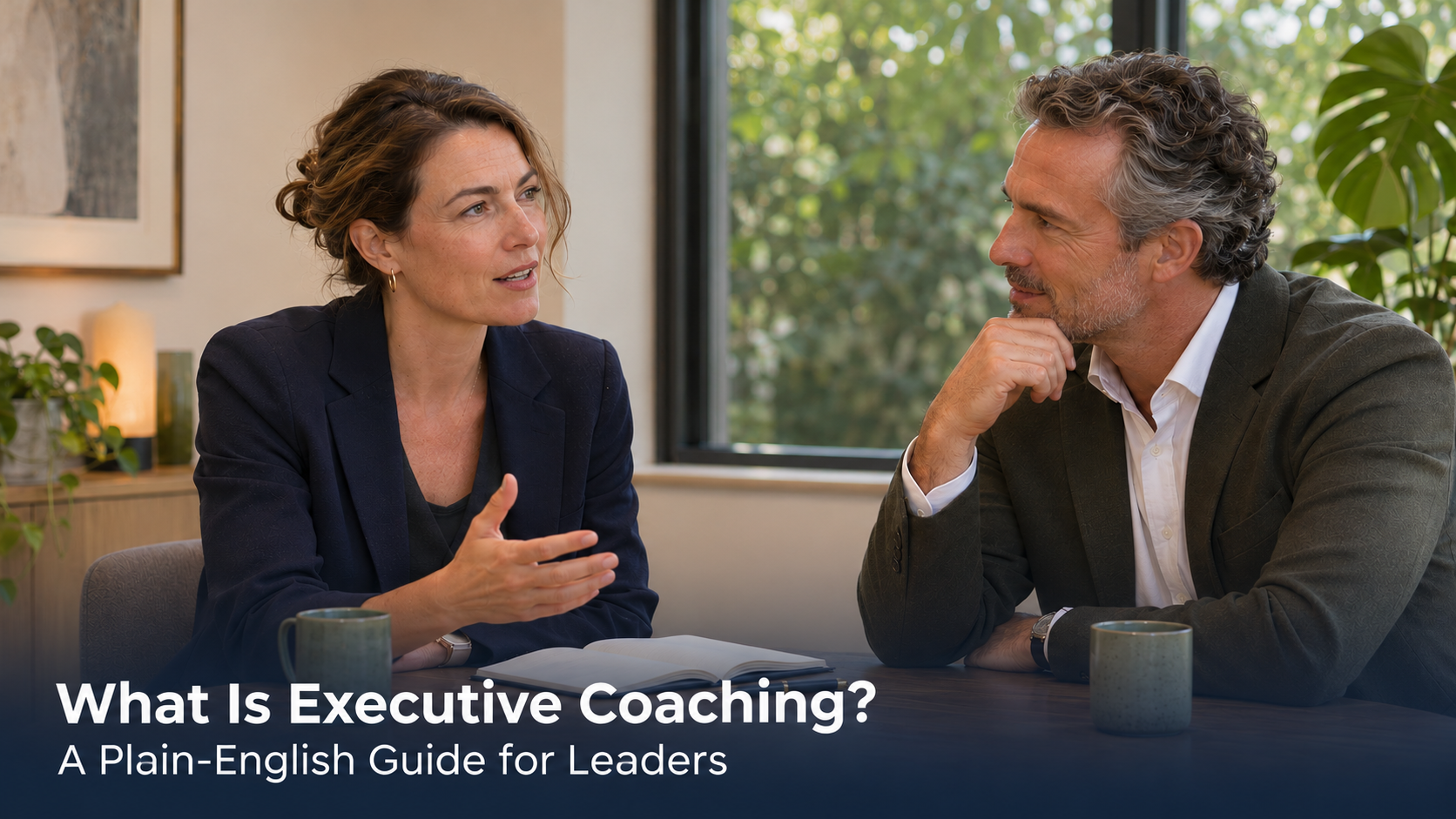
What Is Executive Coaching? A Plain-English Guide for Leaders
Feeling stretched between running the business and leading your people? Executive coaching gives you a private space to think clearly, make better decisions, and grow into the leader you want to be. This guide explains what it is, who it helps, and how to tell whether it is right for you.
What executive coaching is
Executive coaching is one-on-one support from a trained coach who works with you on your leadership. You talk through real challenges from your work, set clear goals, and agree on practical steps to take before your next session.
A good coach won’t tell you what to do. They ask sharp questions, challenge your assumptions, and help you find answers that suit your business and your style. Then they keep you accountable so the changes actually happen.
Training courses teach the same material to a group. Coaching is built around you, your role, and the problems you’re facing right now.
Who it helps
Executive coaching is most useful for:
- Business owners and managers who have grown a business and now need to lead people, not just do the work
- New leaders stepping into a bigger role for the first time
- Experienced leaders facing a hard decision, a restructure, or a change in direction
- Anyone who wants to lead better, whether that means clearer communication, more confidence in tough conversations, or stronger teams
You don’t need to be in crisis to benefit. Many leaders start coaching because they want to get even better at what they already do well.
How it works
Every coaching relationship is a little different, but most follow the same pattern.
1. We start with where you are. Early sessions focus on your role, your goals, your strengths, and the areas that feel hardest. Some leaders also gather feedback from colleagues so the picture is complete.
2. We agree on what success looks like. A useful goal is specific. “Run our next planning meeting without relying on notes” is far more helpful than “be a better leader.”
3. We meet regularly. Sessions are usually held every few weeks. Each one might cover a current problem, a difficult conversation you need to prepare for, or progress on something you started last time.
4. You try things in your real work. Between sessions, you put new approaches into practice. At the next session, you look at what worked, what didn’t, and what to change. Most of the growth happens in this cycle.
5. We review and wrap up. Once you’ve reached your goals, you can finish the program or continue for support during your next stage of growth.
How coaching differs from other support
Coaching is often confused with a few other options, so here’s how they compare:
- Mentoring means learning from someone who has been where you are. A mentor will often share what they did. A coach is more likely to help you work out your own answer.
- Training covers skills for a group. Coaching is one-on-one and tailored to your situation.
- Counselling or therapy supports personal wellbeing. Coaching focuses on your performance and leadership. If you are dealing with serious stress or distress, please speak with a health professional first.
Plenty of leaders use more than one. A mentor might share industry experience, while a coach helps you apply it.
What leaders say they gain
People who work with an executive coach often tell us they:
- Get clear on their priorities and stop spending time on less important work
- Feel more confident in performance reviews, feedback, and hard conversations
- Delegate better, which frees up time and builds stronger teams
- Make calmer, more deliberate decisions under pressure
- Understand their own leadership style and how it affects the people around them
Results depend on your commitment and the relationship with your coach. Coaching is not a quick fix, but for the right leader at the right time, the difference can be significant.
Is it right for you?
Ask yourself these four questions:
- Is there a specific part of your work or leadership you want to improve?
- Are you willing to look honestly at your own habits, not just the habits of others?
- Can you set aside time for regular sessions and try new approaches?
- Would an outside perspective help more than advice from people who already know you?
If you answered yes to most of these, coaching could be a strong next step. If you’re still unsure, book a short conversation first. It’s a low-pressure way to see whether the fit feels right.
How to choose the right coach
Choosing your coach matters as much as choosing to start. Look for:
- Relevant experience in leadership roles and in businesses similar to yours
- A clear process, so you know how sessions are run and how progress is tracked
- Confidentiality, so you can speak openly about the things that really keep you up at night
- A good fit, which means you feel comfortable being honest with them
Our guide to the questions to ask before choosing your business and executive coach covers this in more detail.
Coaching for your situation
Coaching can look different depending on where you are in your leadership journey.
If you’re a woman in leadership, you may be managing visibility, confidence, and expectations at the same time. Read how executive coaching helps women in leadership to see how coaching can help.
If you’re a senior leader looking for a clear return on your time, read the benefits of executive coaching for senior leaders.
If you run a business and are wondering whether you need a coach at all, read why entrepreneurs need coaches.
Frequently asked questions
How long does executive coaching last?
Most people work with a coach for three to twelve months. The right length depends on what you want to achieve. A shorter program can tackle one specific challenge, while a longer one supports wider leadership growth.
How often will I meet my coach?
Sessions are commonly every two to four weeks, usually around an hour each.
Is executive coaching only for big companies?
No. Business owners, managers, and leaders in small and medium businesses, not-for-profits, and larger organisations all use coaching. Many find it especially helpful because it gives them a confidential place to talk through hard decisions.
Will my employer know what we talk about?
It depends on the arrangement. When a company pays for coaching, it’s common to agree on general goals and progress, while keeping the details of your conversations private. We’ll confirm this with you before your first session.
How will I know it’s working?
You’ll notice practical changes at work. Decisions may feel clearer, team conversations easier, and your time better spent. We review progress together regularly, so you always know where you stand.
Ready to take the next step?
You don’t need to have every answer before you reach out. Tell us where you are and what you’d like to change, and we’ll help you work out whether coaching is the right fit.
Book a conversation with our team or explore our coaching and mentoring services to see how we can help you lead with more clarity and confidence.


